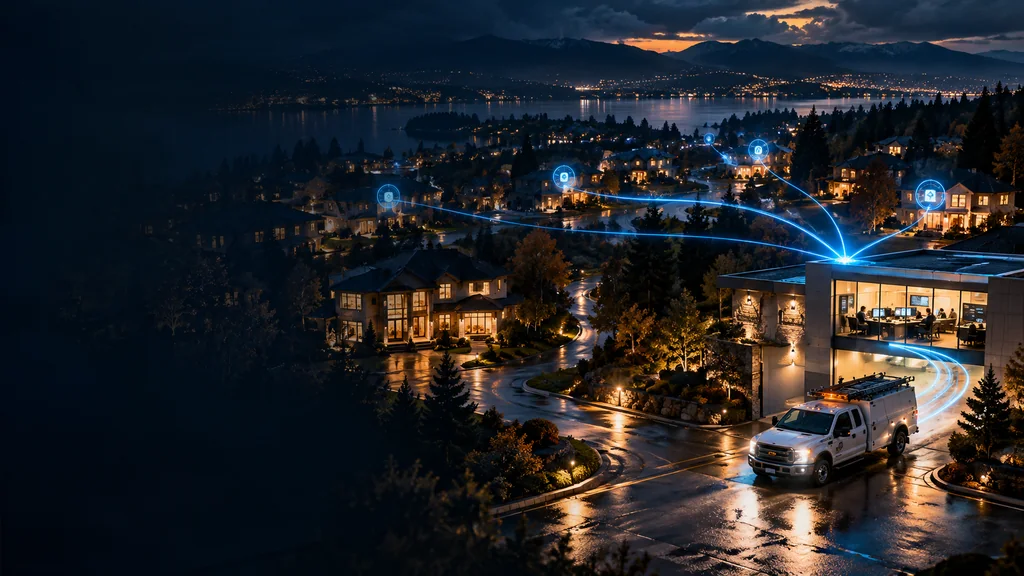
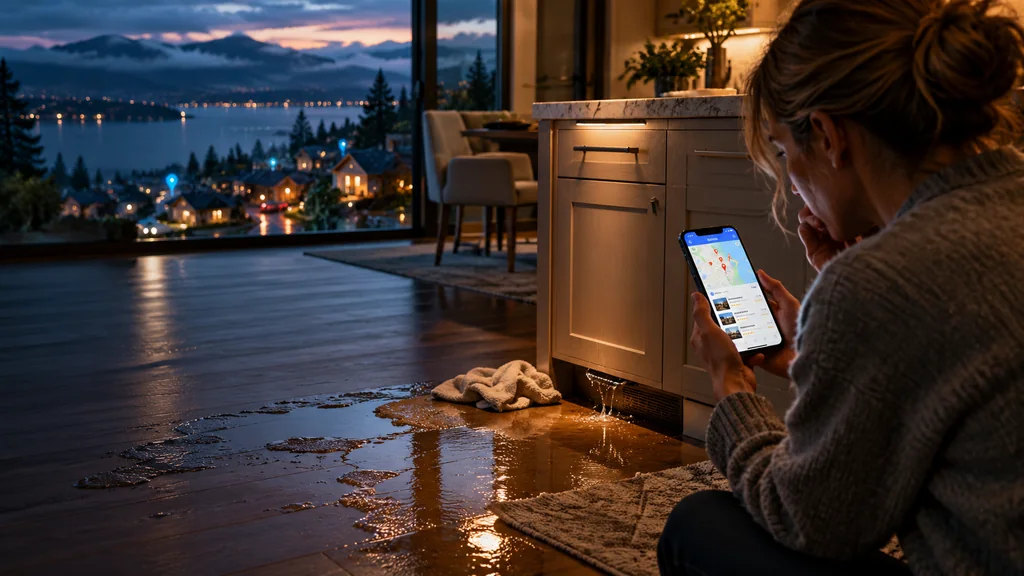
Water damage is one of the clearest examples of high-intent local demand.
The customer did not plan to shop for a mitigation company next month. Something happened, and the decision moved forward fast.
That means the job is often influenced before your phone ever rings.
The homeowner may already have:
- searched Google
- opened Maps
- scanned ratings
- read reviews
- asked an AI assistant for a recommendation
- clicked an ad
- visited multiple websites
- recognized a company they saw earlier
By the time the call comes in, a shortlist may already exist.
Your lead generation system needs to win that pre-call decision.
The water damage buyer has three questions
Can you help me now?
Availability, emergency response, service area, and clear contact options matter.
Can I trust you in my home?
Reviews, photos, credentials, real jobs, team visibility, and professional presentation reduce uncertainty.
Are you the obvious local choice?
Maps presence, search visibility, third-party mentions, useful content, and repeated brand exposure all influence familiarity.
Strong water damage marketing answers all three before the dispatcher says hello.
Layer 1: capture explicit search demand
Start with the demand you can see most clearly.
That includes searches around:
- water damage restoration
- water removal
- water extraction
- flooded basement cleanup
- burst pipe cleanup
- sewage cleanup
- structural drying
- emergency water mitigation
Your local SEO, Google Business Profile, organic service pages, and paid search campaigns should make it easy for the homeowner to understand what you do and whether you serve the property.
Layer 2: improve the profile that gets compared
Water damage companies often focus on their website while neglecting the profile a homeowner may see first.
A strong local presence should include:
- accurate categories and services
- complete contact information
- correct hours
- relevant service areas
- recent real job photos
- steady authentic reviews
- professional review responses
- consistent business information across the web
Google says local ranking is primarily based on relevance, distance, and prominence. You cannot control the searcher's location, but you can improve how clearly and credibly your business is represented.
Layer 3: build market familiarity before the emergency
Not every future water loss customer is searching today.
But your market is full of homeowners dealing with related property concerns, researching home issues, consuming local media, watching weather, or interacting with relevant service categories.
This is where broader paid media can matter.
A water damage company can build familiarity across:
- social platforms
- streaming TV
- online video
- websites and display inventory
- retargeting
Then, when the emergency happens, the company is not completely unfamiliar.
Layer 4: concentrate media around in-market signals
The old model is:
Pick ZIP codes -> show ads to everybody.
A more precise model is:
Identify fresh market signals -> build compatible audience segments -> activate media around the reachable portion -> refresh continuously.
This is not a magic list of every homeowner with water damage.
It is a way to allocate more marketing pressure toward the portion of the market displaying stronger signs of current relevance.
For an emergency service, that can be significantly more useful than treating every household as equally likely to need you.
Layer 5: retarget people who are still deciding
Some homeowners call immediately.
Others visit a site, speak with insurance, compare contractors, ask a spouse, or delay until the damage gets worse.
Retargeting helps keep your company visible during that decision window.
The best retargeting is not endless repetition. It reinforces the reasons to choose you:
- 24/7 response
- local team
- real reviews
- water expertise
- insurance familiarity
- documented process
- real project proof
Layer 6: protect the lead after it arrives
The marketing system can work perfectly and still fail at the last step.
If a caller hits voicemail, waits too long, gets transferred repeatedly, or never receives follow-up, the opportunity may be lost.
Track:
- answer rate
- missed-call rate
- speed to response
- qualification
- booked dispatch / inspection
- close outcome
- source
The call center, receptionist, owner, dispatcher, CRM, and follow-up automation are part of customer acquisition whether the marketing department likes it or not.
Do not optimize water damage marketing around traffic
A restoration owner should not celebrate because website sessions increased 40%.
Ask instead:
- Did qualified water calls increase?
- Did booked opportunities increase?
- Did jobs close?
- Which ZIP codes and service lines produced?
- Which campaigns produced gross profit?
- Where are competitors still winning?
The closer the measurement gets to real jobs, the better the decisions become.
FAQ
How much do water damage leads cost?
There is no reliable universal number. Cost varies dramatically by market, channel, competition, job type, season, and lead quality. Measure cost per qualified opportunity and cost per closed job against your own economics.
Is SEO or PPC better for water damage leads?
PPC can activate quickly; SEO and Maps can compound. Strong companies often use both, then add reputation, retargeting, referrals, and broader audience activation.
Can you identify exactly who searched for water damage?
Do not assume that. Market-intent systems work from available signals and compatible audiences; they are not a perfect list of every person who typed a particular Google query.
The market is already moving
You do not need more random impressions. You need to understand where water-damage demand is forming and what portion of it your company is positioned to capture.
SHOW ME MY MARKET Request a Restoration Market Gap Report.
Written by Isaac Voss